
Sell Your Wind Rights
Learn about wind energy rights, easements, leases, royalties, and accommodation agreements – including long-term risks, valuations, and the sale process.
Sell Your Wind Rights (Request an Offer):
Weighing Risks and Benefits
Risks Associated with Wind Royalties & Payments
Unlike oil and gas royalties, which deplete over time, wind leases, easements, royalties and other accommodation payments often escalate over time. So, why would a landowner sell the royalties (or participation/accommodation agreements)? There are several significant risks associated with wind royalties.
Repowering
The biggest risk is a partial or full repowering. Wind turbines are mechanical and often need to be repowered after 8-13 years. As of 2025, wind energy permits have been halted, which impacts the ability to repower existing projects.
Inflation
Many wind easements, royalties, and accommodation agreements fail to account for inflation (or cap inflation), making the payments less valuable over time.
Wake Effects
Additional nearby wind development may introduce wake effects, reducing turbine production and potentially causing it to be moved or removed.
Contract Terms
Wind agreements usually favor the developer/operator and can often be canceled by the operator at any time. Future revenue may not be guaranteed, even if the wind project remains operational.
Greenfield Development
Incentives, such as Investment Tax Credits (eliminated by the Big Beautiful Bill) and county tax abatements, incentivize new development in a “greenfield” rather than repowering or extending the current lease agreement.
Political Climate
The political climate can encourage or discourage wind development. The Big Beautiful Bill eliminated tax incentives for reneables and Trump halted the permitting of wind energy permits in July of 2025, which impacts new projects and older projects in need of repowering (after about 9-13 years).
Modernization Moves
Full or Partial Repowering of Wind Projects
The biggest risk associated with owning wind royalties is a partial or full repowering of the wind farm. Wind turbines are known to have a useful life of 10-25 years, so most wind agreements have a primary term of 20-30 years.
However, the reality is that wind turbines are mechanical and need regular maintenance and part replacement. In just 9-13 years, most wind turbines need their blades and electronics replaced.
Side Note: Check out this Texas Monthly article about wind farm graveyards.
Wind turbine technology is rapidly evolving, and costs are dropping. Executives are often faced with the choice of replacing components vs. repowering, both of which are similar in cost.
Partial Repowering
Partial Repowering involves replacing key components, usually resulting in longer blades and newer technology installed in the original tower base. The wind project usually generates the same power capacity but uses fewer turbines (often half as many). The changes of your turbine being removed are fairly high, especially if you only receive royalties on one or two turbines. You could lose your win royalties entirely.
Full Repowering
The wind farm will be completely dismantled in a full repowering, and replacement turbines will be installed, often reusing roads, power lines, and substations. The new turbines will have a much larger rated capacity, but the wind farm will probably generate the same wind power output. In this situation, there is a real possibility that your turbine or turbines will be reduced or removed entirely.
Something else to consider: If you own wind royalties but not the surface, you may be more likely to lose your wind turbine(s) in a repowering event. Operators prefer the simplicity of dealing with royalty owners who also own the surface.
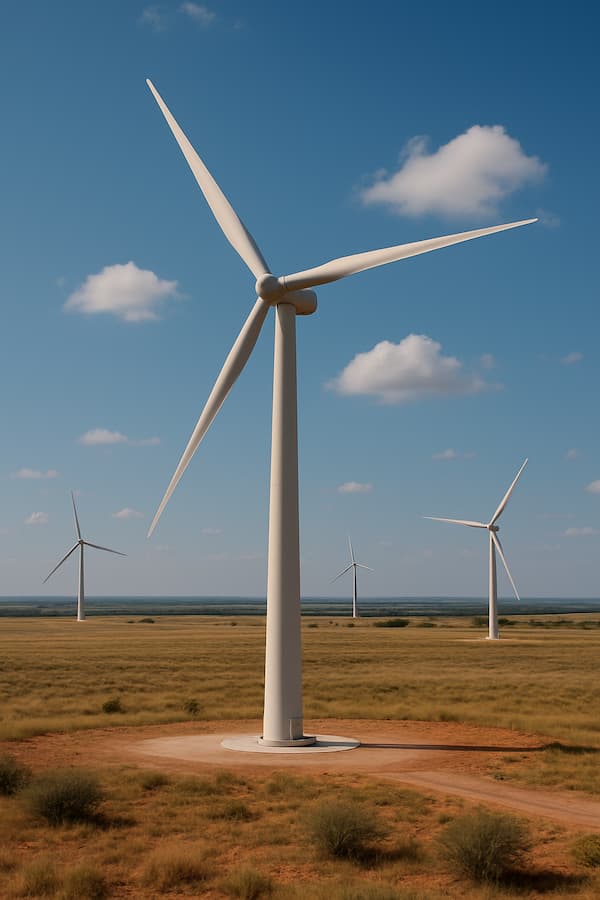
Downwind & Turbulence
Wind Wake Effects
As wind power development accelerates, new wind farms are being built near current wind farms, introducing the conflict of wind wake effects. If a new wind project places turbines upwind of your turbines, they could dramatically decrease the wind power generated. This is a huge issue in the legal world and one that has not yet been resolved in the courts.
Duke University’s Environmental Law and Policy Journal has an excellent publication called Wind Wakes, Wake Effect Impacts, and Wind Leases: Using Solar Access Laws as the Model for Capitalizing on Wind Rights during the Evolution of Wind Policy Standards, which is worth reading.
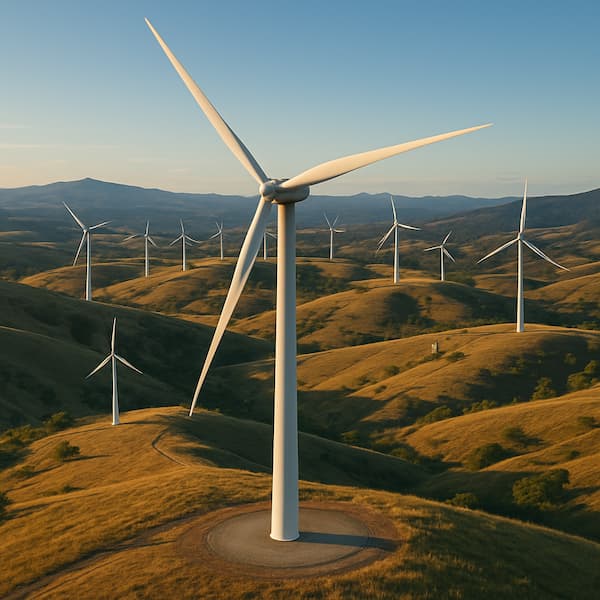
What Really Matters
How Wind Energy Rights Are Valued
There are many factors that play into the value of wind farm leases, easements, royalties, and other compensation. These include location, capacity, average wind speed, current royalty percentage, wind production, lease terms, and even the operator of the wind farm or project.
Location
Wind farms are typcially situated in areas with consistently high wind speeds, ideal terrain, and close proximity to electric transmission lines.
Capacity
Newer wind turbines are typcially rated for a higher capacity and generate more wind power and revenue.
Wind Speed
Higher average wind speeds genrate more wind energy and therefore, more revenue.
Production
Higher producing wind turbines generate more wind power over the life of the wind farm.
Lease Terms
Favorable lease terms positively impact the market value of wind royalties.
Operator
Large, experienced wind farm operators are often more financially sound.

Evolving Wind Energy Law
Contract Terms & Future of Wind Development
The oil and gas industry has a robust body of law, but the wind energy industry is new and still developing. The legislation and case law are still being developed, so wind energy agreements and contracts are long and vary widely in content.
Typically, contracts have a primary term of 20-30 years with one or two 10-30 year extensions. Most property owners assume they will receive royalties or participation payments for up to 60 (or more) years. This may not be the case.
Wind projects are depowered, reducing the number of turbines but keeping power output the same. Other projects will be decommissioned. The wind industry is still new and developing. Technology will change, and new ways of harnessing clean and renewable energy will be developed.
Although wind farm popularity changes with the political climate, the reality is that we cannot fill our energy needs with wind and solar power. We have to develop a new solution, and it will probably be something that does not exist today. Wind is not a long-term solution.
Additionally, building wind turbines requires an enormous amount of fossil fuel-derived energy, and decommissioning results in a massive amount of waste.
The bottom line is that we don’t know what wind energy will look like in 20-60 years.
Additional Risks for Those Receiving Participation Payments
Landowners who receive participation payments, but do not host turbines normally have a contract clause stating the contract can be terminated by the operator at any time – it can be fully voluntary!
Common Motivations to Sell
Why Sell Your Wind Lease?
Why People Sell Their Wind Rights
My mom just turned 90 and didn’t have long to live. We decided, together, to sell her wind rights so I wouldn’t have to worry about probating her estate after she passed. She had sold the farm years ago, reserving the wind rights, and received a small quarterly payment.
We decided to sell the wind rights for our two wind turbines. We were proud to be part of a wind development project, but we’re ready to sell our house (on 4 acres) and move close to the grandkids. We could keep the wind payments, but at this point, we want to simplify our lives.
I decided to sell because my turbines are already nearly 10 years old and will need to be repowered soon. The current administration is cripling wind energy, and I’m not confident that the wind farm will be able to repower the turbines. I’d rather not take the risk – it’s better for me to sell now.
My uncle left me his wind accommodation payment (I didn’t even know that was a thing!). While I enjoy periodic payments, I’d rather receive a lump sum now and use it to expand and grow my business.